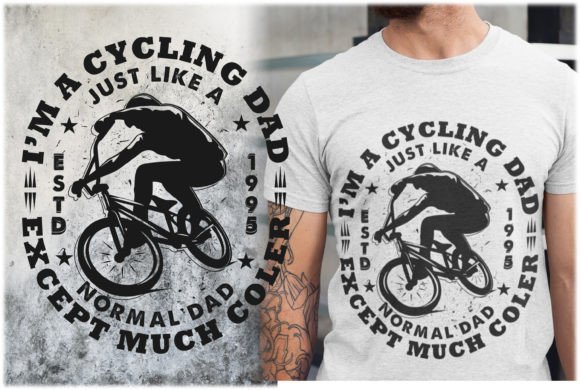
Reviewing the I'm a Cycling Dad T-Shirt Design
As an embroidery designer who has spent years digitizing files and testing them on everything from crisp cotton to stretchy performance blends, I approach every new machine embroidery design with a critical eye. It is not just about whether the image looks good on a screen; it is about how those stitches will lay down on fabric, how the tension holds up after washing, and whether the final finished product feels premium enough to sell or gift with pride. Recently, I took a close look at the I m a Cycling Dad T-Shirt Design, evaluating its potential for real-world application in my own craft business and client projects.
The first impression of this design is one of playful personality. It captures a specific niche identity—the proud father who loves his bike—with a visual language that is bold yet approachable. For embroidery professionals, the immediate question is always about complexity. Does the layout rely on tiny, fragile details that will break under stress, or does it use solid shapes that provide durability? In this case, the design appears to balance thematic clarity with structural integrity, making it a strong candidate for various T-Shirt Designs and apparel applications. The mood is lighthearted, which makes it exceptionally suitable for personalized gifts where emotional connection drives the purchase.
Real-World Application: The Custom Sweatshirt Test
To truly understand the value of any embroidery file, you have to imagine it in a specific context. I envisioned using this design for a custom order: a high-quality, heather grey sweatshirt for a customer wanting a Father’s Day gift. This is a common scenario for Etsy sellers and small shop product creators. The "Cycling Dad" theme fits perfectly here because it speaks to a hobby that is often a core part of the recipient's identity.
When stitching this onto a sweatshirt, the fabric texture plays a huge role. The thicker material of a sweatshirt can handle a moderate stitch density without puckering, which is a significant advantage. If this design were composed entirely of delicate running stitch outlines, it might get lost in the fleece. However, assuming the digitizer has utilized appropriate fill stitch techniques for the main elements, the design should pop with excellent coverage. The contrast between the thread colors and the heather grey background would need careful selection—perhaps a bright yellow or electric blue to mimic cycling gear aesthetics—ensuring the thread colors enhance rather than clash with the garment.
Versatility Across Product Lines
Beyond sweatshirts, the versatility of this graphic allows it to shine in multiple categories. For custom apparel, it works well on standard cotton tees, provided the stabilizer is chosen correctly to prevent distortion. But let us think bigger. This design could easily transition into an embroidered patch. Patches are trending heavily in the craft business sector right now. By stitching the design onto a twill backing and cutting it out, you create a versatile accessory that customers can iron or sew onto jackets, backpacks, or caps. This transforms a simple T-Shirt Designs asset into a multi-use design asset.
Consider also the tote bag design market. A canvas tote featuring this cycling theme appeals to the eco-conscious dad who bikes to work or the grocery store. Canvas is a sturdy fabric that handles embroidery beautifully, allowing for higher stitch counts without stability issues. Similarly, for baby embroidery projects, such as a onesie for a newborn whose dad is a cyclist, the scale of the design would need to be reduced. This is where checking the original file’s scalability is crucial. If the design relies on very small text or intricate spokes on the bicycle wheels, shrinking it too much could cause the stitches to merge, resulting in a muddy appearance.
Technical Considerations for Embroiderers
From a technical standpoint, there are several factors to review before loading this digital embroidery file into your machine. First, consider the hoop size. Ensure that the design dimensions fit comfortably within your standard hoops, such as a 5x7 or 6x10 inch frame, leaving enough margin for the fabric to grip securely. If the design is large, you may need to hoop the garment directly, which requires extra care to avoid hoop burns on delicate fabrics.
Another critical aspect is the choice of stabilizer. For knit fabrics like t-shirts and sweatshirts, a cut-away stabilizer is generally recommended to provide long-term support, especially if the design has any weight to it. If you are using a tear-away stabilizer on a stretchy fabric, you risk the design distorting over time with wear and washing. For woven fabrics like aprons or tote bags, a tear-away might suffice, but testing on scrap fabric is non-negotiable. Always run a test stitch-out to check for thread breaks, tension issues, and overall clarity.
Pay close attention to any lettering in the design. Small text can be problematic in embroidery. If the phrase "I m a Cycling Dad" includes small fonts, verify that the satin stitches used for the letters are not too wide, which can cause tunneling, or too narrow, which might not cover the fabric adequately. On dark fabrics, you may need to use an underlay stitch or a lighter thread color to ensure readability, though this depends on the specific colorway you choose.
Commercial Viability and Brand Consistency
For commercial embroidery professionals and digital product sellers, the appeal of this design lies in its niche specificity. Niche designs often convert better than generic ones because they target a passionate community. Cyclists are known for their dedication, and family-oriented cycling gear is a steady seller. By offering this as part of a curated collection, you build brand consistency. It signals to your customers that you understand their lifestyle.
However, transparency is key. Since the product description mentions it is a "print-ready t-shirt design" and lists usage on mugs, bags, and posters, it is vital to clarify the format you are selling or using. If you are selling the embroidery file itself, ensure buyers know it is digitized for machines. If you are selling the finished item, highlight the quality of the stitching in your printable mockup or product photos. High-resolution images that show the texture of the threads can significantly boost buyer engagement and trust.
Before listing this as a personalized gift or adding it to your Etsy seller inventory, double-check the licensing terms. While the description welcomes you to use the design on various products, confirming whether it allows for unlimited commercial sales or requires attribution is a professional best practice. This protects your small shop product line from potential intellectual property issues.
Final Verdict for Makers
The I m a Cycling Dad T-Shirt Design offers a charming, targeted aesthetic that performs well when matched with the right materials. It is not just a graphic; it is a conversation starter stitched in thread. For makers, the key to success with this design lies in preparation: choosing the right stabilizer, testing thread contrasts, and selecting products that complement the design’s bold nature. Whether you are creating a holiday embroidery gift, a boutique apparel piece, or a custom patch, this design provides a solid foundation for a high-quality handmade product. Just remember to respect the limitations of the fabric and the machine, and the result will be a durable, attractive item that resonates with its recipient.